Honey for Memory: What Our Sources Say, and What They Don’t
Quick answer
We found no authoritative source that supports honey for memory, so we cite none. Health sources point to habits and to meals rich in fruits, vegetables and whole grains, and say no food or pill has proof that it prevents Alzheimer’s. Honey ritual ads are a sales hook; MemoHoney itself contains no honey.
Is honey good for memory?
Not according to anything we could find. We looked for an authoritative source that supports honey as a memory aid and found none, so this post cites nothing for that idea. Honey is a food you may enjoy; there is no good evidence it protects or restores memory.
The Alzheimer’s Association casts a wider net than honey. In its view, no single food, drink, ingredient, vitamin or pill has shown that it can prevent, treat or cure Alzheimer’s disease (Alzheimer's Association, Alternative Treatments). A spoonful of anything falls under that statement, honey included.
We sell MemoHoney, a capsule whose name includes the word honey but whose label does not. That is one reason we wrote this post: people search “honey for memory” and land on ads that blur the two.
What do health sources say about honey and memory?
They talk about eating patterns and habits, not honey. We checked the main pages we rely on for memory questions and noted whether each one backs honey.
| Source | What it says about food, pills or memory | Backs honey for memory? |
|---|---|---|
| Mayo Clinic, memory tips | Puts fruits, vegetables and whole grains on the plate as one of seven habits; names no supplement | No |
| Global Council on Brain Health | Get nutrients from a healthy diet; endorses no product for brain health | No |
| Alzheimer’s Association | No food, drink, vitamin or pill has proof that it stops or cures Alzheimer’s | No |
| NCCIH (NIH) | Little direct proof that any supplement keeps dementia away | No |
| NIA, forgetfulness | Be wary of unproven memory products; see a doctor about warning signs | No |
| FDA, false promises | Red flags in products sold as Alzheimer’s cures | No |
Sources: (Mayo Clinic, Memory loss: 7 tips to improve your memory) (Global Council on Brain Health (AARP), The Real Deal on Brain Health Supplements) (NCCIH, 7 Things To Know About Supplements and Alzheimer's). Each one speaks to memory or brain health, and none of them recommends honey for it.
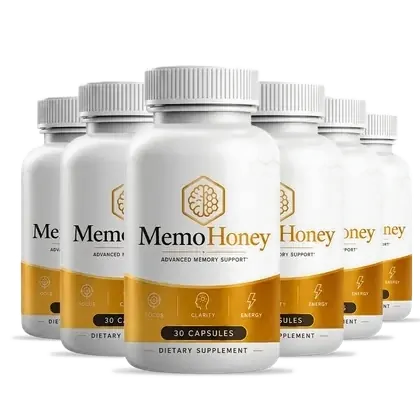
The 6-bottle box is the cheapest way to buy MemoHoney.
$49 per bottle with the 6-bottle box, $294. Refunds within 60 days · 3 or 6 ship free · BuyGoods secure payment.
Where does the “honey trick for memory” come from?
Mostly from ads. MalwareTips, a security site, has described a run of 2026 ads that open with a honey story and close on a supplement checkout, some of them ending at MemoHoney. We have not seen the ads ourselves; the steps below follow their write-ups.
- 1
The hook
A short video about a “simple honey-based ritual”, often a spoonful at bedtime, framed as a secret worth hearing out.
- 2
A borrowed face
Celebrity or doctor-style clips that MalwareTips says may be AI-made or edited. A fake Elon Musk video was one; Bill Gates was named among others.
- 3
The recipe tease
A cheap “golden honey recipe” is promised, and the video keeps you waiting for it.
- 4
The pivot
The recipe turns into a bottle. Hints about Alzheimer’s or dementia appear along the way.
- 5
The checkout
Multi-bottle packs and extra offers after payment. The product may contain no honey at all.
Each step is a known pattern. The FDA notes that so-called Alzheimer’s cures are sold mostly online and are often dressed up as dietary supplements that nobody at the agency has checked for safety or results. Their makers count on a story doing the work that evidence should do.
Can a honey recipe reverse memory loss or dementia?
No. The FDA says no treatment has been shown to stop or reverse the course of Alzheimer’s, and it warns about products that promise to turn back mental decline “in just a week” or call themselves a scientific breakthrough (FDA, Watch Out for False Promises About So-Called Alzheimer's Cures).
Regulators have acted on claims like these before. In 2019 the FTC and FDA sent warning letters to companies selling products as Alzheimer’s treatments or cures, a disease science cannot yet cure. Those letters went to other firms, not to MemoHoney; they show how seriously such promises are taken.
Is the honey ad in front of you a sales funnel?
Probably, if it trips any of these checks. They are drawn from the FDA warning signs above and from the ad patterns MalwareTips describes. One yes on the first five is enough to walk away.
Honey ad check
Does the ad promise memory gains within days or a week?
Does a famous person or a “doctor” vouch for it in a video?
Does it say one product fixes many unrelated problems?
Does it hold back the recipe until the end of a long video?
Does it claim doctors or drug companies are hiding it?
Is the person this is for having memory trouble that upsets daily life?
Answer every question to see your result. Nothing is saved or sent.
No classic warning signs. Still read the real label and the seller’s return rules before you pay.
Skip the ads for now and book a doctor’s visit. Bring a list of medicines and examples of the lapses.
That is a sales funnel pattern. Close the ad; if you still want a product, go to its label and order page directly.
Why does MemoHoney carry a honey name with no honey inside?
The brand does not explain it. The label lists two arginine forms, two citrulline forms, beta alanine, niacin and calcium in a vegetable capsule, and nothing from a hive. Our honey and MemoHoney page walks through every line.
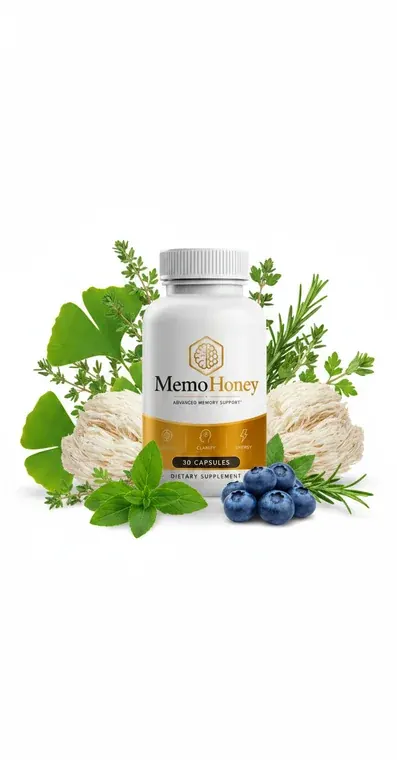
Food props around a pill bottle are a common sales look. They suggest a kitchen remedy while the product is a lab-made capsule.
That gap matters to buyers. If you wanted honey, you will not find it here, and the amino acids inside have no memory evidence of their own at these amounts.
Should you eat honey for your brain anyway?
Eat it if you like it, as a food. Just do not count it as brain care. The habits our sources point to are movement, sleep, social and mental activity, and a plate built on fruits, vegetables and whole grains (Mayo Clinic, Memory loss: 7 tips to improve your memory).
Honey is a sweetener. If you manage diabetes or your weight, ask your care team how it fits your plan before adding daily spoonfuls because an ad told you to.
For meal ideas that stay inside what those sources say, read foods for memory after 50. For the bigger picture on normal slips and warning signs, see the memory after 50 guide.
Honey and memory: your questions
Is honey good for memory?
We found no authoritative source showing it. Honey is a food; no health source we use names it as a memory aid.
Does the honey trick for memory work?
There is no evidence that it does. MalwareTips describes the “honey trick” as an ad hook that leads to a supplement checkout.
Is honey good for memory loss or dementia?
No. The Alzheimer’s Association says no food or pill has proof that it stops or cures Alzheimer’s, and real memory loss calls for a doctor.
Is the honey memory recipe from Bill Gates real?
No. MalwareTips reports fake celebrity videos, Bill Gates among the faces used, in memory-supplement ads. No endorsement exists on any page we opened.
Is raw or manuka honey better for the brain?
We found no authoritative source saying any kind of honey helps the brain or memory.
Is honey cinnamon good for memory?
We found no authoritative source supporting it. Treat honey-and-cinnamon memory claims as marketing.
Does MemoHoney contain honey?
No. MemoHoney is a capsule of amino acids, niacin and calcium. The honey is in the name only.
What should I do instead of a honey ritual?
Follow Mayo Clinic’s habits: stay active, keep your mind and social life busy, sleep well, eat fruits, vegetables and whole grains, and review your medicines.
Page check
Written by
Reads the MemoHoney label line by line and weighs each health statement against NIH, Mayo Clinic and Alzheimer's Association guidance.
- Label re-read on October 13, 2026
- Product details: the printed label and brand pages. Health details: the sources linked in the text
- Found an error? Write to [email protected]. How we work: editorial standards