The Second Arginine Line in MemoHoney: L-Arginine AKG 2:1, Checked
Quick answer
The second arginine line on the MemoHoney label is one compound: arginine bound to alpha-ketoglutarate (AKG), often sold as AAKG. Its 200 mg includes the AKG part, so it supplies less than 200 mg of arginine. Medical references are silent on this form, and the brand offers no study for its promise of better absorption.
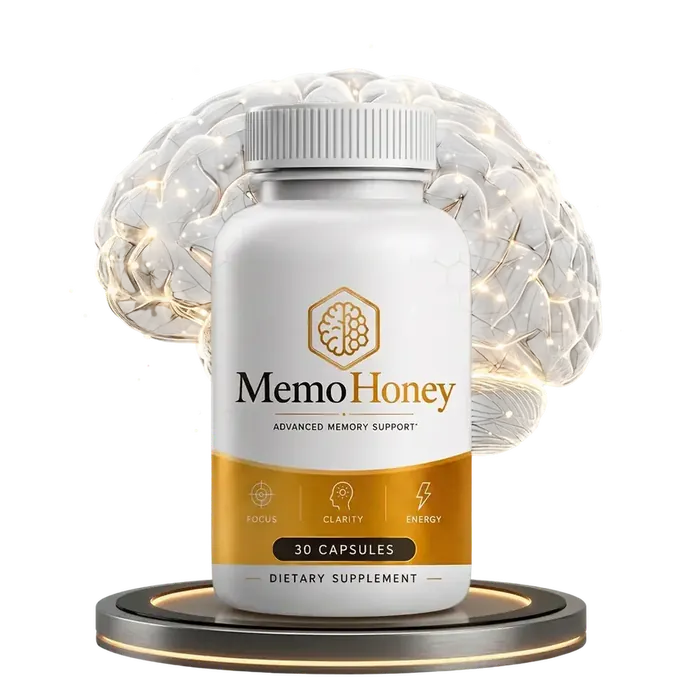
Why does MemoHoney list arginine twice?
The label never says. The first line is plain L-arginine, 200 mg. The second, printed as "L-Arginine AKG 2:1 Extract", is another 200 mg in which arginine is chemically joined to a second molecule, alpha-ketoglutarate (AKG). Supplement shops often call this pairing AAKG.
Think of it as a single compound rather than two supplements sharing a capsule. It has nothing to do with honey or bees either. The brand's only stated reason for choosing it is a sales-page promise that the bound form "improves absorption". We test that promise below.
If you want the safety side of arginine first, the L-arginine page covers medicines, heart history and cold sores in detail.
What is inside the 200 mg AKG line?
Six parts of one short label line. Tap each to see what is known and what is not. For an older reader, the useful takeaway is simple: this is more arginine, in a form nobody has studied for memory.
The amino acid half
Arginine
The same amino acid as the base line above it. Whatever arginine this line delivers adds to that 200 mg, for an under-400 mg total per capsule.
The partner molecule
Alpha-ketoglutarate
AKG for short. It has no line, amount or Daily Value of its own on the panel, and no source we opened covers it taken on its own, so we make no claim about it.
The ratio
2:1
Printed without a definition. Neither the label nor our sources explain it, so any milligram figure built from it would be a guess, and we leave it alone.
The weight
200 mg
The weight of the whole compound, partner included. That is why this line supplies less than 200 mg of arginine.
The label word
"Extract"
Usually a plant term. Here the label names no plant, and no source we read explains why a bound amino acid is called an extract.
The sales claim
"Improves absorption"
The only benefit the brand gives this form. No study is named next to it, on the sales page or anywhere else.
The 6-bottle box is the cheapest way to buy MemoHoney.
$49 per bottle with the 6-bottle box, $294. Refunds within 60 days · 3 or 6 ship free · BuyGoods secure payment.
Does arginine AKG absorb better than plain arginine?
Nothing we found shows that it does. MemoHoney says the bound form improves absorption, but it offers no blood measurements, no comparison with plain arginine and no named trial. The page section headed "Scientific References" is a picture of journal and newspaper logos, with no studies listed.
The Federal Trade Commission expects health claims to rest on competent and reliable scientific evidence, generally human trials, and tells sellers to check that the dose and formula studied match their own (FTC, Health Products Compliance Guidance). A one-line claim with no study cannot meet that bar.
Here is how the line holds up, point by point. A zero means the information is simply not published.
200 mg sits in the Supplement Facts panel, not inside a hidden blend.
The 2:1 comes with no milligram split, so the real arginine figure is unknown.
None on the sales page; its reference section is logos only.
No blood levels, no timing, no side-by-side with plain arginine.
None of the medical pages we opened covers AAKG.
No memory or focus study of AAKG turned up, at any dose.
Is there any research on arginine alpha-ketoglutarate?
Very little that a reader can use. The medical references we opened on arginine, from the NIH, RxList, WebMD, Mayo Clinic and Memorial Sloan Kettering, all describe plain L-arginine. None has a section on the AKG form, and MedlinePlus had no arginine entry available when we checked.
- The NIH exercise fact sheet reviews arginine at 2 to 20 g a day. It mentions creatine AKG, a different supplement, but not AAKG.
- A 2006 exercise study of AAKG in trained men appears in research indexes. Only the bibliographic record was readable, with no findings, so this page draws nothing from it. It did not look at memory.
- We found no study of AAKG in older adults, and none on memory, focus or clarity.
With no research of its own, the fair way to judge this line is to count it as arginine. That is what we do for both the dose comparison and the safety advice on this page.
How does the AKG line compare with arginine doses in research?
It is a small piece of a small total. The right-hand column shows how many times the entire 200 mg line each research amount is, before even removing the AKG share.
| Amount | What it represents | Times the AKG line |
|---|---|---|
| 200 mg | The AKG line on the MemoHoney label, partner included | 1 |
| Under 400 mg | All the arginine in one capsule, both lines | Under 2 |
| 2 g | Low end of daily doses in exercise research (NIH ODS, Dietary Supplements for Exercise and Athletic Performance (health professional)) | 10 |
| 4 g | Low end of daily doses for high blood pressure (RxList, L-Arginine (supplement monograph)) | 20 |
| About 9 g | Daily goal in the VINTAGE MI heart attack trial (JAMA 2006, Schulman et al., L-arginine after heart attack (VINTAGE MI)) | 45 |
Those multiples flatter the label, since only part of the 200 mg is arginine. Even the exercise research, at 10 times this line or more, found little to no effect on performance. For the same comparison across every ingredient, see the full ingredient list.
Do the usual arginine warnings apply to the AKG form?
Assume they do. No medical page treats AAKG separately, and this line delivers arginine just as the base line does. Three warnings matter most for readers over 50:
- Heart and blood pressure medicines. With nitrates, sildenafil-type pills or blood pressure drugs, arginine may push pressure too low (Mayo Clinic, L-arginine).
- Diabetes medicines. Arginine may lower blood sugar, so levels on diabetes treatment could dip too far, per the same Mayo Clinic page.
- After a heart attack. Not recommended; the VINTAGE MI trial saw more deaths on arginine (JAMA 2006, Schulman et al., L-arginine after heart attack (VINTAGE MI)).
The side effects page covers the whole capsule, including the label’s own caution for anyone pregnant, nursing or under 18.
Arginine AKG in MemoHoney: reader questions
What does AKG stand for on the MemoHoney label?
Alpha-ketoglutarate. In this line it is bound to arginine, forming one compound often sold as AAKG.
Is the 200 mg AKG line all arginine?
No. The 200 mg includes the alpha-ketoglutarate part, so the arginine in it is less than 200 mg. The exact amount is not published.
Does the AKG line mean MemoHoney contains creatine?
No. Creatine AKG is a separate product. The label lists no creatine.
Why does the label call it an extract?
It does not say. The term usually describes plant material, and no plant is named for this line.
Was arginine AKG ever tested for memory?
Not in anything we found. The one AAKG study we located was about exercise, and we could not read its results.
Is AAKG the same as agmatine?
No. Agmatine is a different compound with a similar sound, and it is not on this label.
Does MemoHoney explain why it uses AKG instead of more plain arginine?
Only with its absorption line, and no study is attached to it. The label itself gives no reason.
Is there honey or any bee product in the AKG line?
No. Alpha-ketoglutarate is not a honey ingredient, and the label lists no honey anywhere.
Should I ask my doctor about the AKG line?
Yes, if you take heart, blood pressure, erection or diabetes medicines, or have had a heart attack. Treat it as arginine.
Page check
Written by
Reads the MemoHoney label line by line and weighs each health statement against NIH, Mayo Clinic and Alzheimer's Association guidance.
- Label re-read on October 13, 2026
- Product details: the printed label and brand pages. Health details: the sources linked in the text
- Found an error? Write to [email protected]. How we work: editorial standards