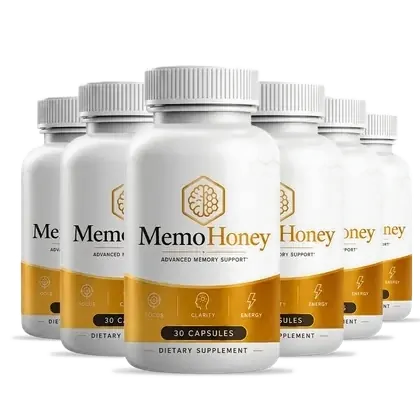
What Our MemoHoney Pages Can and Cannot Do for You
Quick answer
Read these pages as a careful summary, never as a diagnosis. Memohoneycare sells MemoHoney; it did not make it. The capsule holds no honey and is a supplement, so it cannot treat forgetfulness, dementia or Alzheimer's, and with no trial of the formula we cannot promise any result. Worrying memory changes go to a doctor.
What is this disclaimer for?
To set out plainly what memohoneycare.com can and cannot do for you. Memohoneycare is a U.S. stocking partner for MemoHoney. It explains the label, reports the brand's claims and summarizes public health sources.
It is not a clinic, not the maker and not your doctor. Nothing here diagnoses, treats or prevents any disease, and reading a page does not make us your health adviser.
What does the MemoHoney label itself warn?
The bottle carries its own disclaimers, in small print. Tap a number to read each one, or use the list underneath.
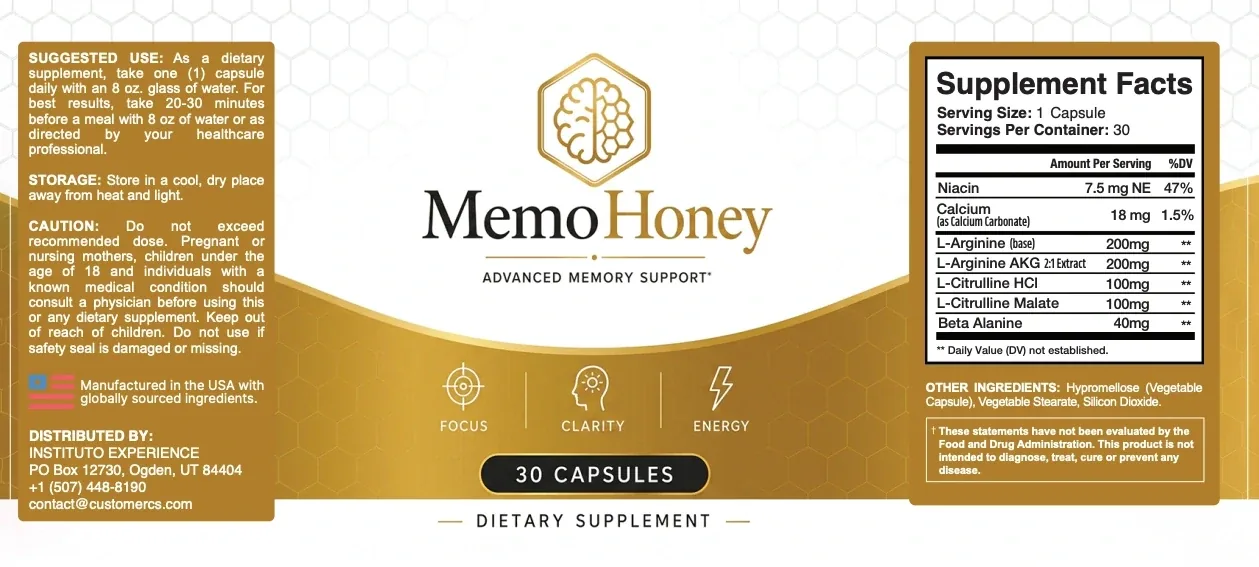
- ADVANCED MEMORY SUPPORT. The only health phrase on the front. The small mark after it points to the FDA box on the right.
- FOCUS, CLARITY, ENERGY. Three words beside icons. They describe what the product is sold for, not results anyone measured.
- Caution. Do not exceed the dose. Pregnant or nursing, under 18 or a known medical condition: consult a physician first.
- Supplement Facts. Seven lines: amino acids, niacin and calcium. Honey is not among them.
- The FDA box. Small print saying the FDA has not reviewed the claims and that the capsule is not meant for treating or preventing illness.
Is MemoHoney a medicine or a dementia treatment?
Neither. Legally it is a dietary supplement, a category that reaches shops with no FDA check of whether it works or is safe (FDA, FDA 101: Dietary Supplements). A phrase like "advanced memory support" falls under the rules for wording that the maker alone answers for (FDA, Structure/Function Claims).
For Alzheimer's disease, not one vitamin, food or supplement has a proven role in preventing or treating it, according to the leading US charity on the disease (Alzheimer's Association, Alternative Treatments). NIH adds that a supplement should never be the reason a doctor's visit gets put off (NCCIH, 7 Things To Know About Supplements and Alzheimer's).
Why can no page here promise you a result?
Because nobody has tested the formula, and its amounts are far below the doses researchers used, for other purposes than memory. Each bar shows the label amount as a share of the studied dose.
In the capsule: below 400 mg. In research: 4 to 24 g daily for blood pressure. (RxList, L-Arginine (supplement monograph)) (Memorial Sloan Kettering, Arginine (About Herbs))
In the capsule: below 200 mg. In research: 3 to 9 g daily in trials. (Avicenna J Phytomed 2019, Barkhidarian et al., L-citrulline and blood pressure meta-analysis) (NIH ODS, Dietary Supplements for Exercise and Athletic Performance (health professional))
In the capsule: 40 mg. In research: 4 to 6 g daily for training. (ISSN position stand: Beta-Alanine (2015)) (NIH ODS, Dietary Supplements for Exercise and Athletic Performance (health professional))
In the capsule: 7.5 mg NE. In research: adult RDA 14 mg (women) to 16 mg (men). (NIH ODS, Niacin (health professional))
In the capsule: 18 mg. In research: adult RDA 1,000 to 1,200 mg. (NIH ODS, Calcium (health professional))
Niacin is the exception: 7.5 mg NE is a normal nutrient amount, about half of daily needs. Any timeline you see online for this capsule was not measured.
When should a doctor come before any capsule?
In these four situations. None of our sources names a safe amount, so the advice holds for small doses too.
| If this is you | What to do | Source |
|---|---|---|
| Memory slips now disrupt daily life, or a relative has noticed | Book a visit. A drug side effect, too little vitamin B12 or a thyroid issue can all be found and treated | (NIA, Forgetfulness: Knowing When to Ask for Help) |
| You are expecting a baby, breastfeeding or not yet 18 | Printed on the bottle: check with a physician first | The MemoHoney label |
| You had a heart attack recently | Ask your cardiologist. A trial after heart attacks saw more deaths on arginine than on placebo | (JAMA 2006, Schulman et al., L-arginine after heart attack (VINTAGE MI)) |
| You take medicine for blood pressure, the heart, erections or diabetes | Show your doctor the label first. Arginine can add to these medicines' effects | (Mayo Clinic, L-arginine) |
All reported effects and medicine questions are on the MemoHoney side effects page.
What helps memory more reliably than a supplement?
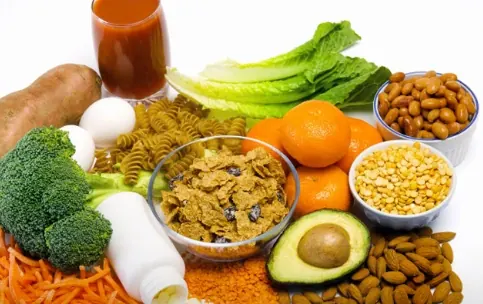
Daily habits. Mayo Clinic's seven tips begin with moving more, then keeping the mind busy, seeing people, staying organized, sleeping well, eating mostly plants and whole grains, and managing any health problems with your doctor (Mayo Clinic, Memory loss: 7 tips to improve your memory).
An expert council convened by AARP goes further: it says to get nutrients from meals rather than pills, keep the money, and spend the effort on healthy routines (Global Council on Brain Health (AARP), The Real Deal on Brain Health Supplements). Our memory after 50 guide goes through each habit.
Testimonials, celebrity videos and results
- The brand's sales pages show testimonials we could not verify. We do not repeat them.
- No celebrity endorsement appears on any brand page we opened. Videos claiming Bill Gates or others back MemoHoney should be treated as fake until proven otherwise.
- Our own review cards stay empty until each writer is matched to a real order; see the MemoHoney reviews page.
- People shown in photos here are brand stock images, not buyers.
Outside links, prices and how we earn
- Links to health sources and brand pages lead to sites we do not control. They can change after we read them.
- Prices are copied from the brand's order pages. The checkout total is what you pay.
- Memohoneycare earns on orders placed through our buttons. That income never buys a kinder sentence: the checkout price does not change, and neither do our warnings.
How we test each claim is on our editorial standards page.
Disclaimer questions
Can MemoHoney reverse memory loss?
No. Nothing in our sources shows its ingredients improve memory, and the FDA calls promises to reverse mental decline a red flag for fake cures.
Does the honeycomb label mean the capsule has honey's benefits?
No. There is no honey in it. The honeycomb design and the name are branding only.
Is a structure/function claim the same as proof?
No. The FDA does not approve these claims in advance; the maker is simply responsible for them being truthful. That is why the bottle carries the FDA box.
Can MemoHoney take the place of a memory medicine my doctor prescribed?
No. Keep taking what was prescribed, and bring the label to your next appointment if you want to add a supplement.
Are the people in the photos on this site customers?
No. They are stock-style images from the brand's own files. We never attach names, ages or results to them.
Will Memohoneycare give me personal health advice by phone?
No. The desk can help with orders. Questions about your health and medicines belong with your doctor or pharmacist.
Is the information on this site current?
The label and brand pages were last checked on October 13, 2026. Brand pages can change at any time, so the checkout and your receipt take priority.
Page check
Written by
Reads the MemoHoney label line by line and weighs each health statement against NIH, Mayo Clinic and Alzheimer's Association guidance.
- Label re-read on October 13, 2026
- Product details: the printed label and brand pages. Health details: the sources linked in the text
- Found an error? Write to [email protected]. How we work: editorial standards